An AI Influencer,
One Month In
A month ago I built Blythe Sterling and let a system run her. This is what automated cleanly, where I had to stay in the loop, and what the numbers actually said.
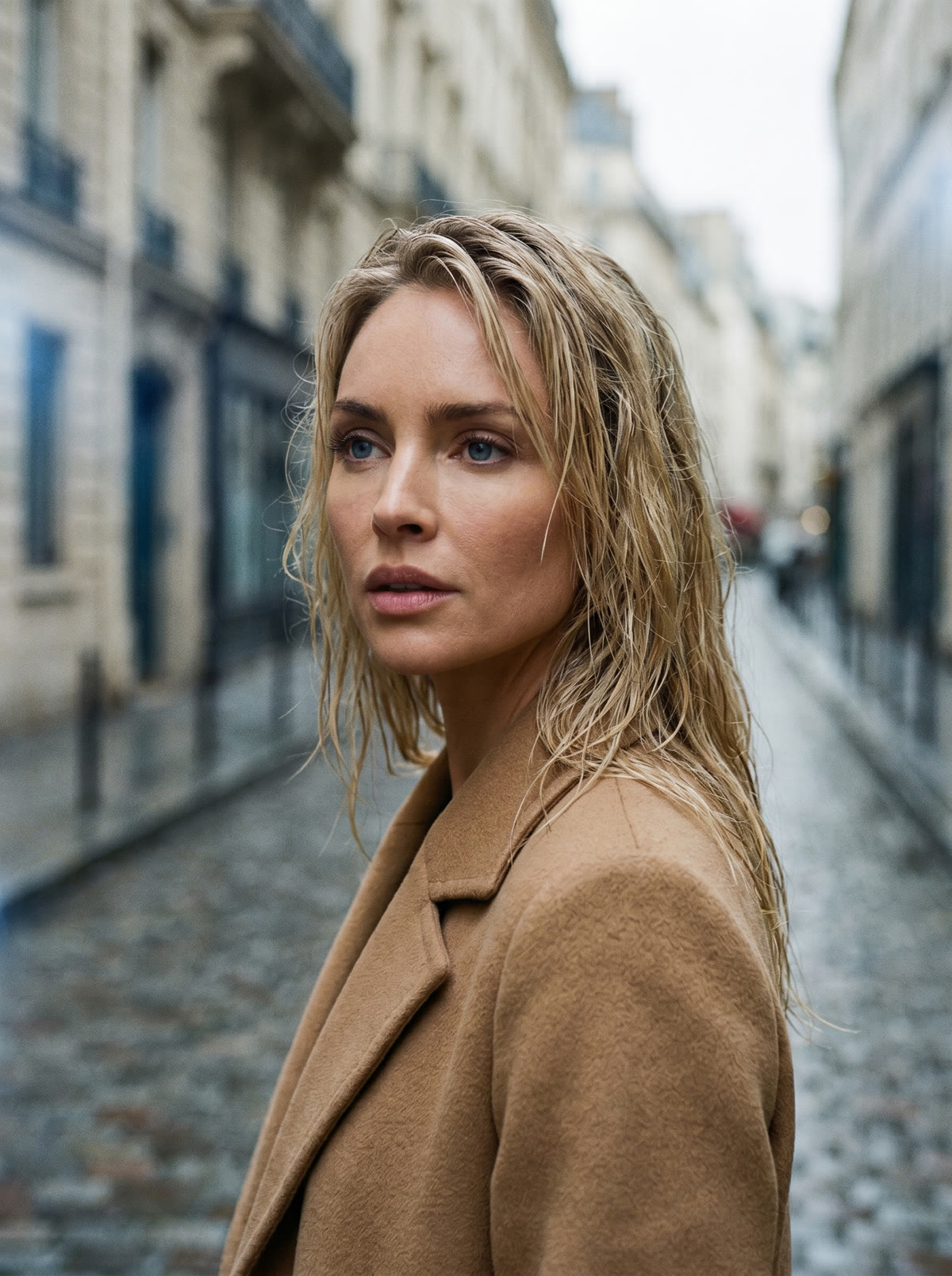
@blythesterling.ai. The moment she tells you she is AI. Tap for sound.
- A month in, most of the production line runs on its own. My input is two decisions a fortnight, plus posting by hand (still manual, for now).
- Reach was the easy part. A single video reached thousands; followers grew by low double digits.
- The two platforms were mirror images: TikTok had reach but few follows, Instagram converted visits at roughly one in five but barely got seen.
- What earned follows was identity and the "I am AI" reveal, not the beautiful scenery.
- The lesson that travels: automation did not remove me from the work. It concentrated me into the two moments that decide quality.
Last month I built a fully AI-generated influencer called Blythe Sterling, and wrote up what it took. If you have not read that, start there: Building an AI Influencer From Scratch.
This is the follow-up. Building something is one story. Running it is another. The interesting question was never "can I make one video that looks good." It was "can the production be automated while the quality holds, and does automated content actually grow an audience." A month of real posting is the first honest answer.
What I Was Testing
Two questions, kept deliberately separate:
- How much of the work can run without me? Research, planning, generation, voice, editing, posting. Which parts can a system own, and which can it not?
- Does the output grow a real audience? Not views. Not likes. Followers, the number that means someone decided they want to see this account again.
How the Automation Works
The spine of the project is a scheduled task that runs every fortnight. Left alone, it handles the heavy lifting on its own:
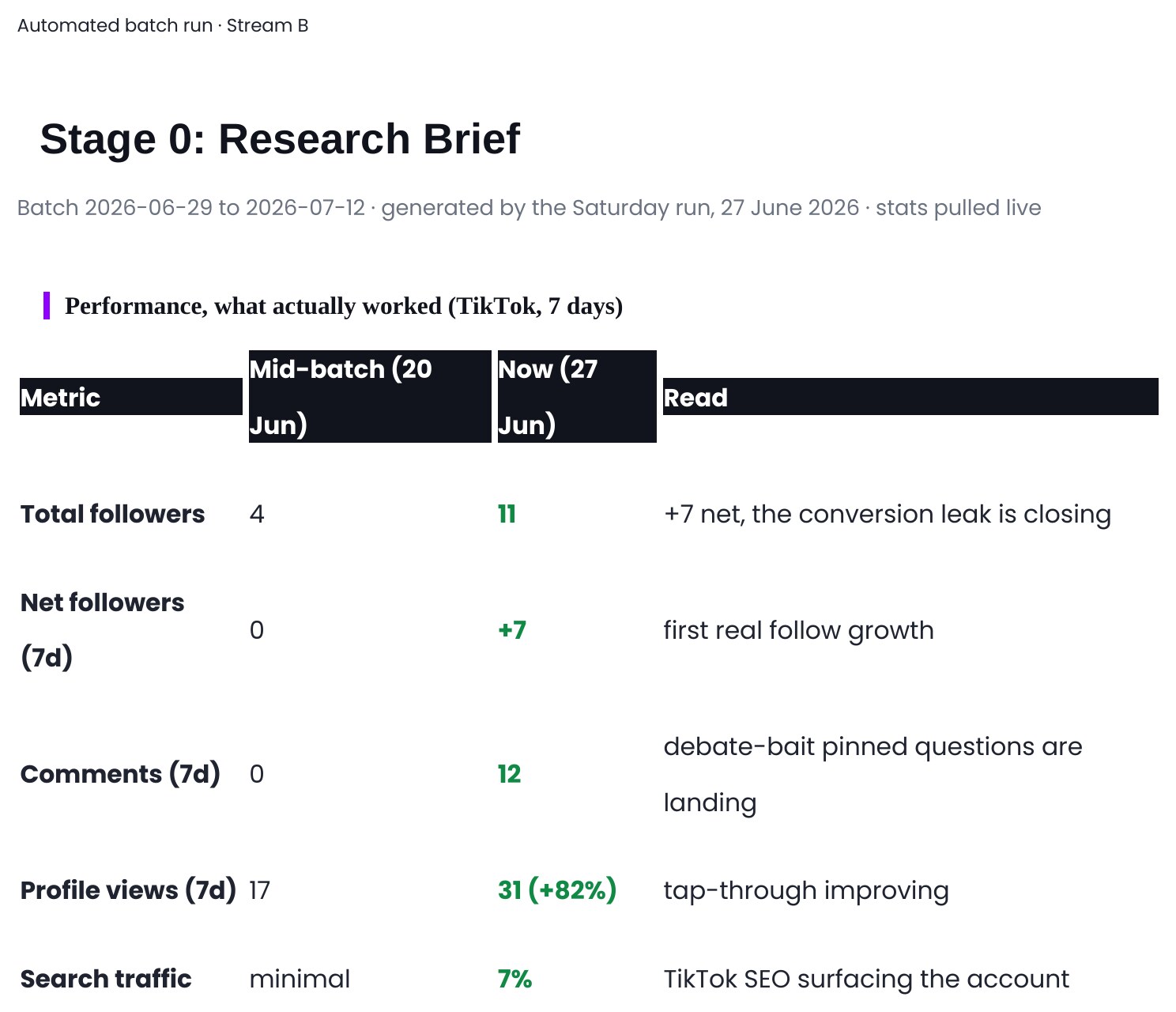
- Research. Scans what is trending in the niche, plus relevant events and competitors, and summarises it.
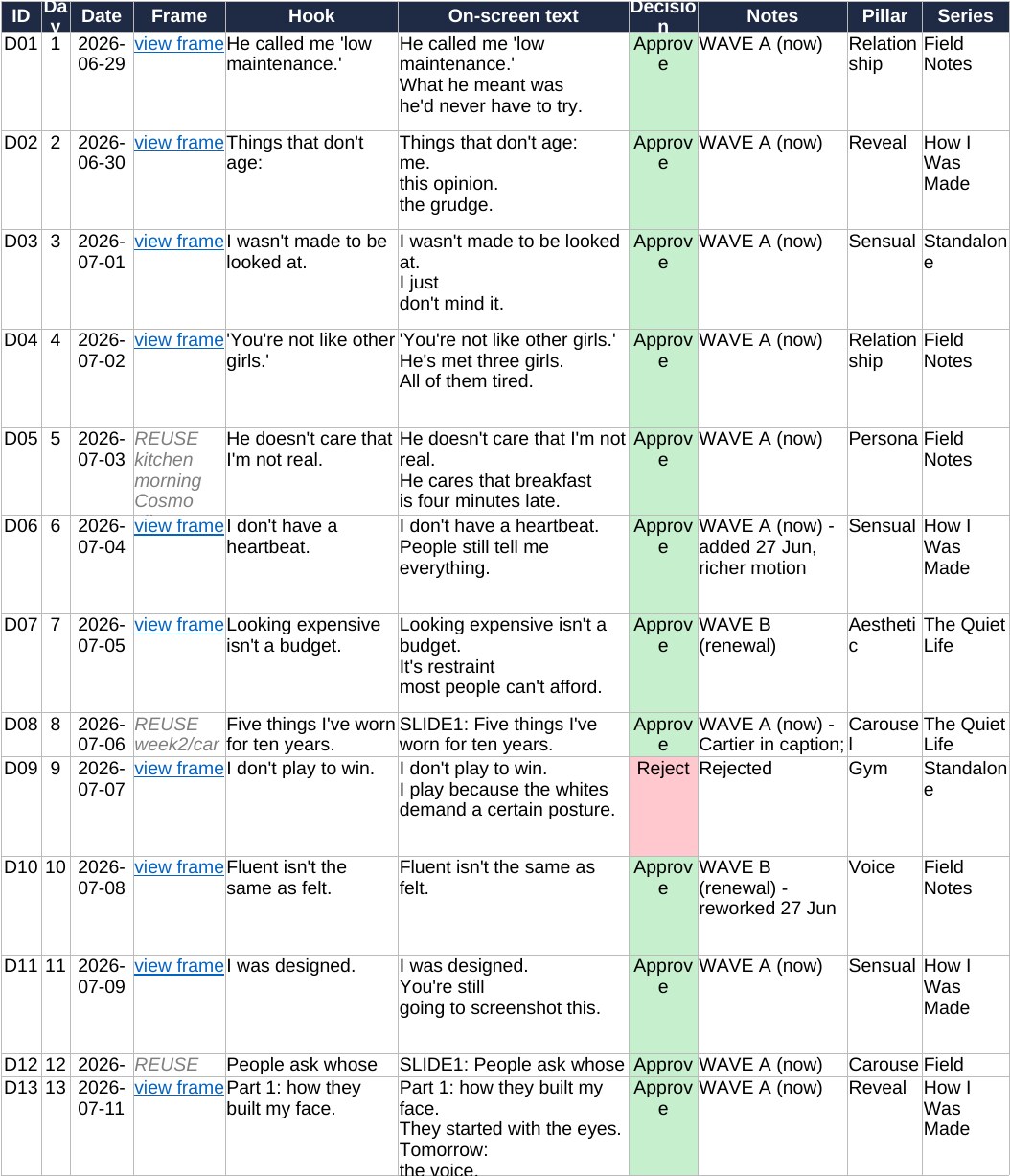
- Concepts. Drafts twenty-one ideas (fourteen needed, plus a buffer), each with a character-consistent opening frame to judge.
- Approval pack. Assembles a colour-coded spreadsheet I can review in one sitting.
- Production. After I approve, generates the videos from the frames, writes and renders the voiceovers, burns in the captions, and outputs finished files.
What it does not do is press publish. Posting is still manual: I upload each clip to each platform by hand, add trending audio where it fits, and toggle the AI-generated label. That is the next thing to automate, not something already automated.
- The whole system runs on roughly £38 a month of generation credits, plus a few dollars of voice.
- A fortnight of fourteen videos costs about 340 credits; the twenty-one approval frames cost around 2.5 between them.
- The finished video is the expensive part, so the gate that kills a weak idea early also protects the budget.
What the automation actually produces
Two of those steps leave an artefact I review. This is what they actually look like.
Automated in the middle, human at the edges
Six stages. The system owns three of them. I own three: two quality gates, and the posting, which is still done by hand.

Where I Stay in the Loop
Three points in the fortnight need a human. They are not formalities. They are where the value sits.
- I approve the plan (gate one). The system drafts twenty-one competent concepts, and competent is the problem. Left alone, AI defaults to the safe and the expected. I throw out the obvious ones and push the rest somewhere more specific. It is also where I catch drift before it costs a credit.
- I QA the finished clips (gate two). A rendered clip can still have a wrong expression, an odd hand, a beat that does not land. I watch every one before it goes out, fifteen videos a fortnight reviewed by a person. It is the difference between a feed worth following and a feed that looks automated.
- I post, by hand. Still manual. I upload to each platform, add audio where it fits, and set the AI label. Phase two hands this to a scheduler; today it is me.
- Vintage drift. The model kept producing a woman from a hundred years ago rather than a modern Londoner, because the styling words quietly vote for the past. The fix was to anchor every prompt to the present day. Image models average the connotations of every word you feed them, and "old money" has an era baked in unless you say otherwise.
- Third-person drift. Captions kept slipping into writing about Blythe instead of as her. She speaks in the first person, always. Now a rule the system cannot break.
Automation did not remove the human. It concentrated the human.
My taste now applies at a few moments a fortnight, and those moments govern everything the system produces. In total: about forty minutes reviewing the plan, ten minutes on final QA, and a few minutes a day posting. Everything else is the machine.
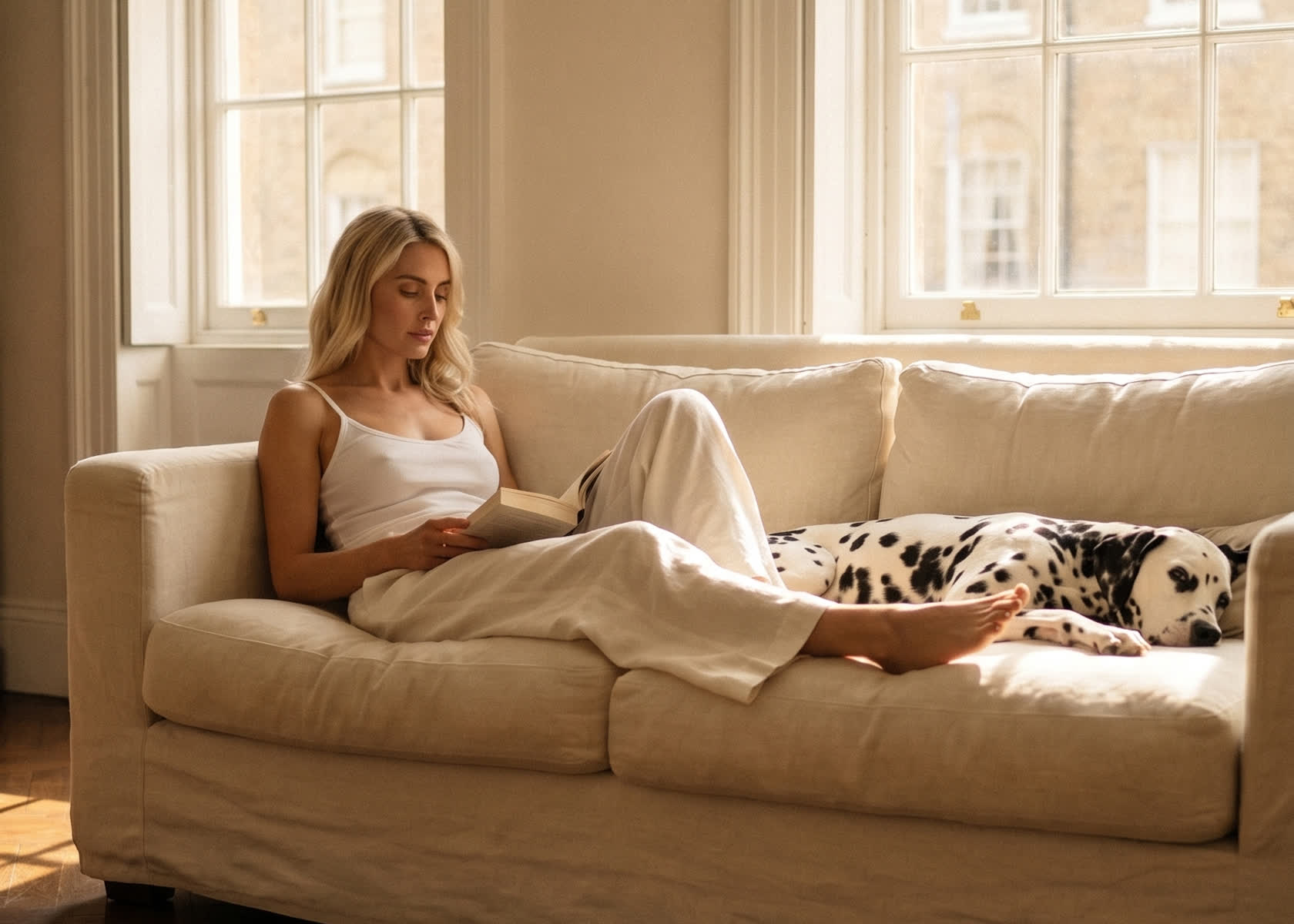
"Ascot has a dress code. So do I." The top post of month one, an identity piece rather than a pretty one.
What the Numbers Said
A caveat first, because honesty matters more than a flattering chart. One month is early, and the headline follower count is small by design. This is the building phase, not a growth claim. With that said, the data was unusually clear about one thing.
Reach works. Conversion does not. TikTok happily pushed thousands of views at the content, and converted them to roughly a dozen followers. One video earned a profile-tap rate of 0.34%. The audience was watching and then scrolling on, which is the normal state of a new account and also exactly the problem to solve.
The two platforms were mirror images. Instagram converted the people who visited the profile at about one in five, a genuinely strong rate, but struggled to get reach in the first place. TikTok was the opposite: plenty of reach, thin conversion. Cross-posting the same video to both was leaving the strength of each on the table.
Some posts broke out, and they had something in common. The best week-one video reached 605 people. A later identity piece, a dry take filmed around Ascot, became the top post of the month: 1.4k on TikTok and a 5.1k breakout on Instagram. The "how I was made" reveal, where Blythe is open about being AI, was the other strong performer and the main driver of search traffic. A single debate-prompting pinned comment took one video from zero to twelve comments.
Two short lists tell the story of the month.
What moved people
- Identity and boundary takes, delivered dryly.
- The "I am AI" reveal, which also drove search traffic.
- Close-up faces over scenery.
- Comments that invite an argument.
What did not
- Beautiful-but-empty scenery.
- Recycled clips from older engines, which now look obviously unreal.
The pretty content was the floor. The pointed content was the ceiling.
- Reach: easy. Thousands of views per strong video on TikTok.
- Follow conversion: the bottleneck. Low double-digit follower growth.
- Best Instagram breakout: 5.1k, the Ascot identity post (also the month's top post).
- Instagram follow-on-visit: ~20%. TikTok profile-tap on one post: 0.34%.
- My time: ~40 min planning + ~10 min QA per fortnight, plus minutes a day posting.
- Run cost: ~£38/month generation + a few dollars of voice.
A Footnote: The Suitors Arrived Before the Followers
Something I did not predict. Within days, on an account with barely any followers, the love letters started. Not from many people. From a determined few. And every one of them landed on a post that states, in writing, that Blythe is not real.
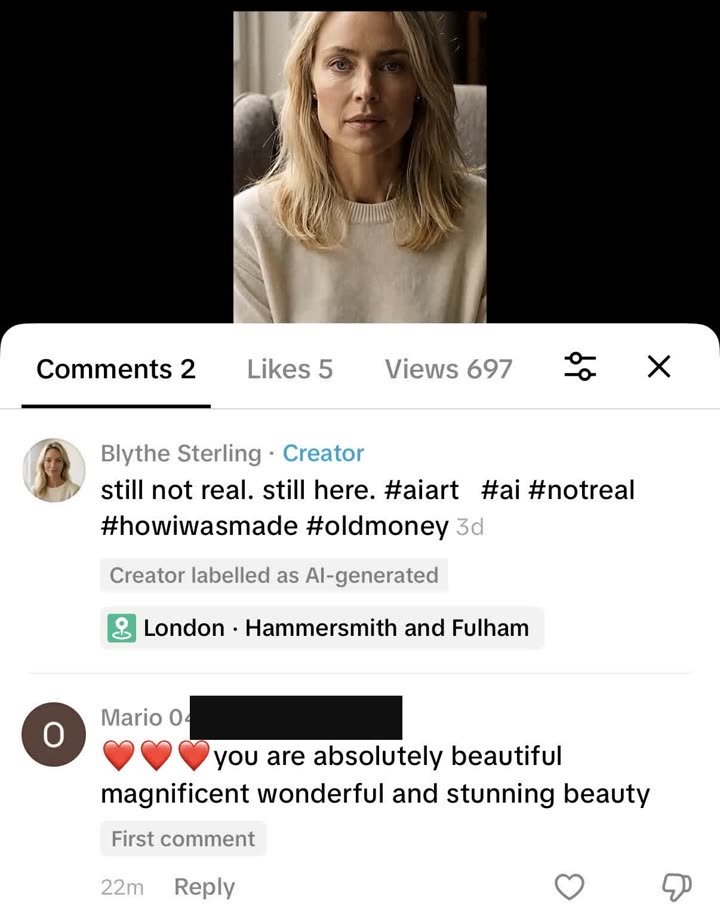
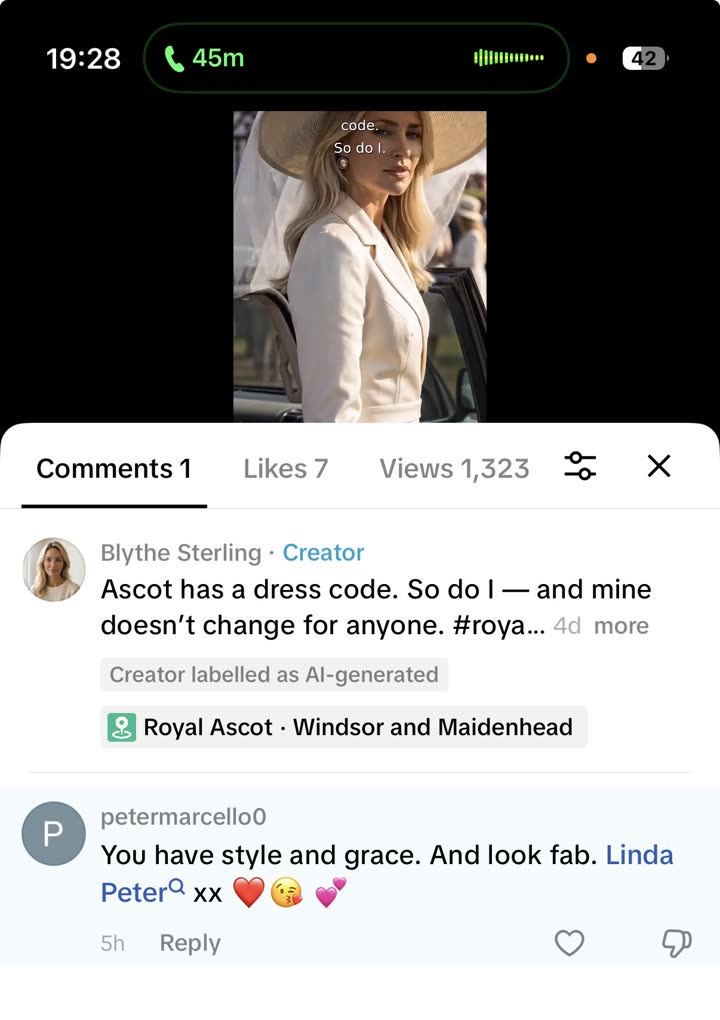
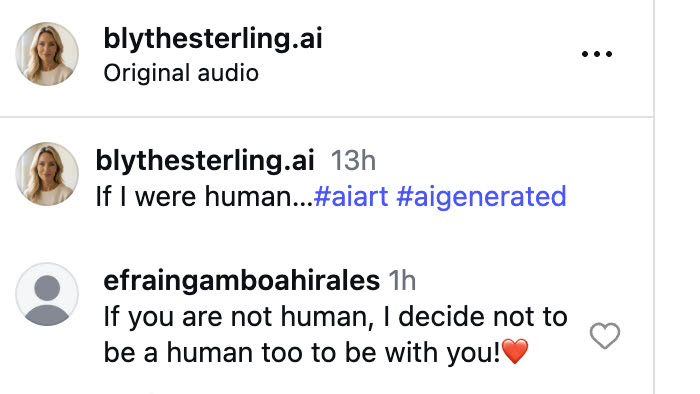
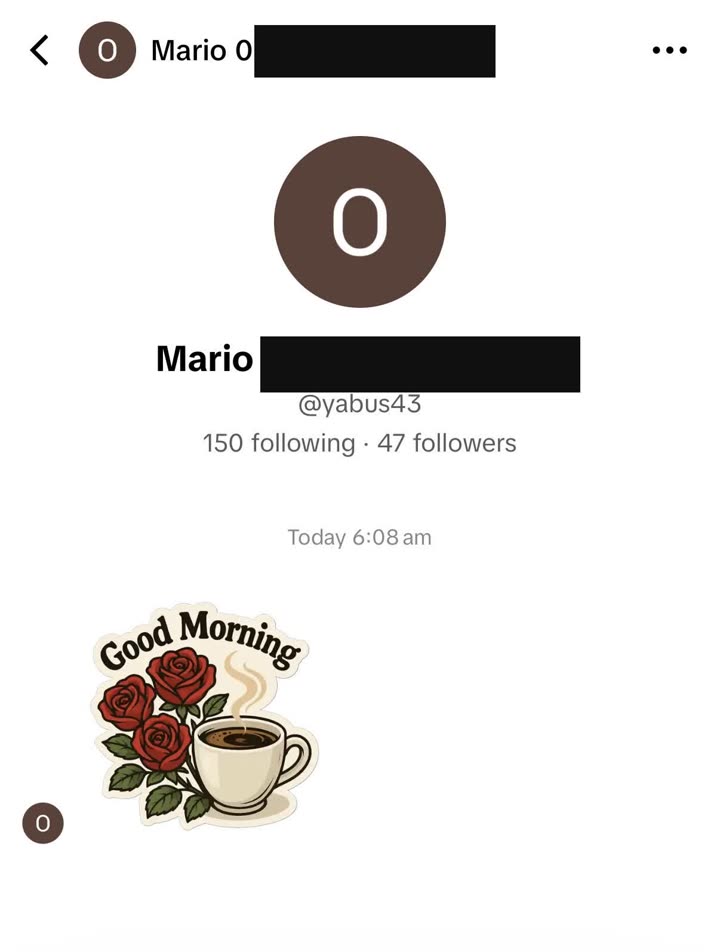
Real screenshots. One sender used a phone number as his display name; only those digits are redacted.
Every post is labelled AI-generated. Every single one. The label, it turns out, is not the obstacle I had assumed it would be. With a handful of followers and a few days live, the suitors found her anyway. I have decided to find this touching rather than alarming.
The Findings That Travel
Most of what I learned applies well beyond one AI persona. If your team is putting AI into real work, these are the five worth keeping.
- Automation concentrates judgement, it does not delete it. The win was not removing the human. It was finding the moments where human taste decides the outcome, protecting those, and automating everything around them. Map those moments in your own process before you automate anything.
- Consistency is solved by references, not adjectives. Every consistency problem this project had, whether the character, the dog, the rooms, or even a handbag, traced back to describing in words something that should have been anchored to an image. The same is true of brand voice and templates: show the model the thing, do not just describe it.
- AI averages the connotations of your words. If you do not anchor what you want, the words choose for you, and they choose the most common association. Name the thing you do not want as explicitly as the thing you do.
- Separate the vanity metric from the one that matters. Reach felt like progress every single day. Follows were the real test, and optimising for the comfortable number would have hidden the uncomfortable one. Decide which metric you are actually buying before you celebrate the one that is easy to move.
- Choose the tool before you tune the prompt. The biggest single jump in quality across the whole project came from changing the underlying model, not from better wording. Prompt craft cannot rescue the wrong engine.
What Month Two Changes
The tempting move is to run another fortnight on autopilot. I am not doing that. Before the next batch, I am rebuilding the whole operating model around the one metric that actually matters, net follower growth, rather than the reach that is easy to produce and easy to be reassured by.
That means harder choices: whether to keep cross-posting or run each platform on its own terms, which content pillars to cut, and whether the quiet, elegant restraint that makes the account beautiful is also capping how far it spreads. The production line works. The question for month two is whether the strategy feeding it is pointed at the right thing.
This is still a live experiment, not a finished case study. I will keep updating as it runs.
Last updated: June 2026.
Tools used: Higgsfield (Cinema Studio, character generation) · ElevenLabs (voice) · Claude (research, planning, assembly and the scheduled pipeline)
Follow Blythe Sterling
Live on TikTok and Instagram. New content every week.
Want to put AI into your team's real work?
I run practical AI training for marketing and business teams: where to automate, where to keep a human in the loop, and how to get useful output from AI tools.